These requirements are designed to reduce safety risks and ensure batteries operate safely and efficiently.
Why the right location matters
Most modern home batteries use lithium-based technology and are designed to operate safely in Australian conditions. However, batteries generate heat during charging and discharging cycles, and exposure to excessive heat or moisture can damage internal components, reduce performance and shorten the lifespan of the battery system.
Installed in the wrong location, a battery system can also pose a safety hazard. Batteries perform best when installed in a cool, dry location protected from extreme temperatures and weather.
Where batteries should not be installed
Under AS/NZS 5139:2019, batteries must not be installed in habitable rooms within a home.
Habitable rooms include:
- Bedrooms
- Living Rooms
- Family Rooms
- Dining Rooms
- Studies
- Rumpus Rooms
While most lithium home solar batteries are safe with built-in protections to protect against overheating, installing batteries away from habitable areas (and mounting batteries on fibrous cement sheeting) is an added precaution in the unlikely event of a malfunction or fire.
The best places to install a home battery system
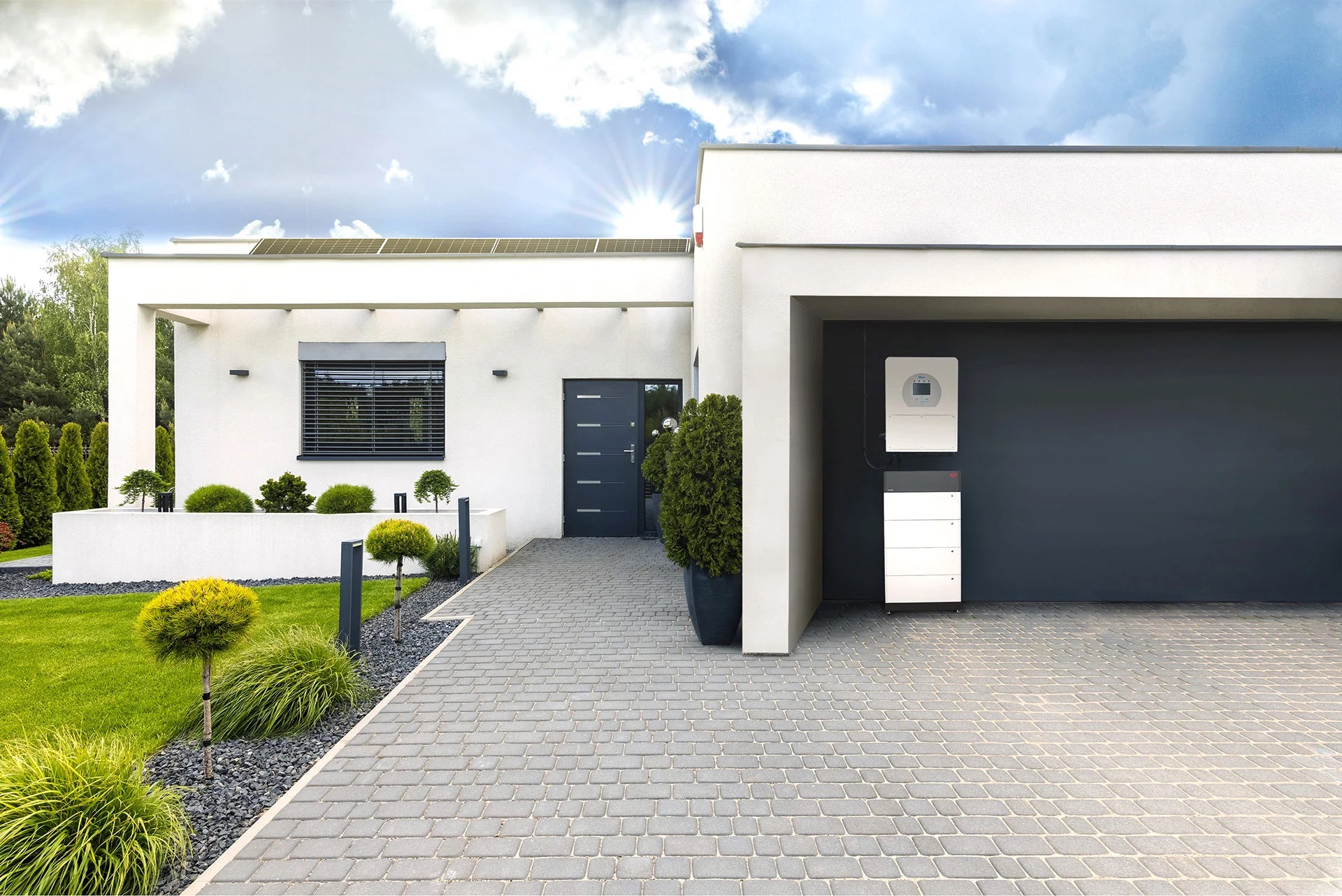
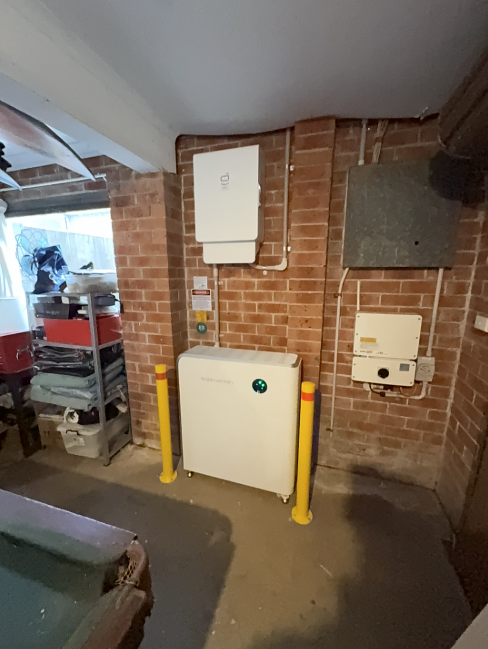
Batteries can either be installed outdoors or indoors in non-habitable spaces such as a garage, carport, laundry, utility room or storage area.
It’s preferable to position the battery as close to the main electrical switchboard as possible, but they can be installed further away if necessary. Shorter cable runs simplify the installation and reduce installation costs.
Here are some important considerations when installing a battery system indoors:
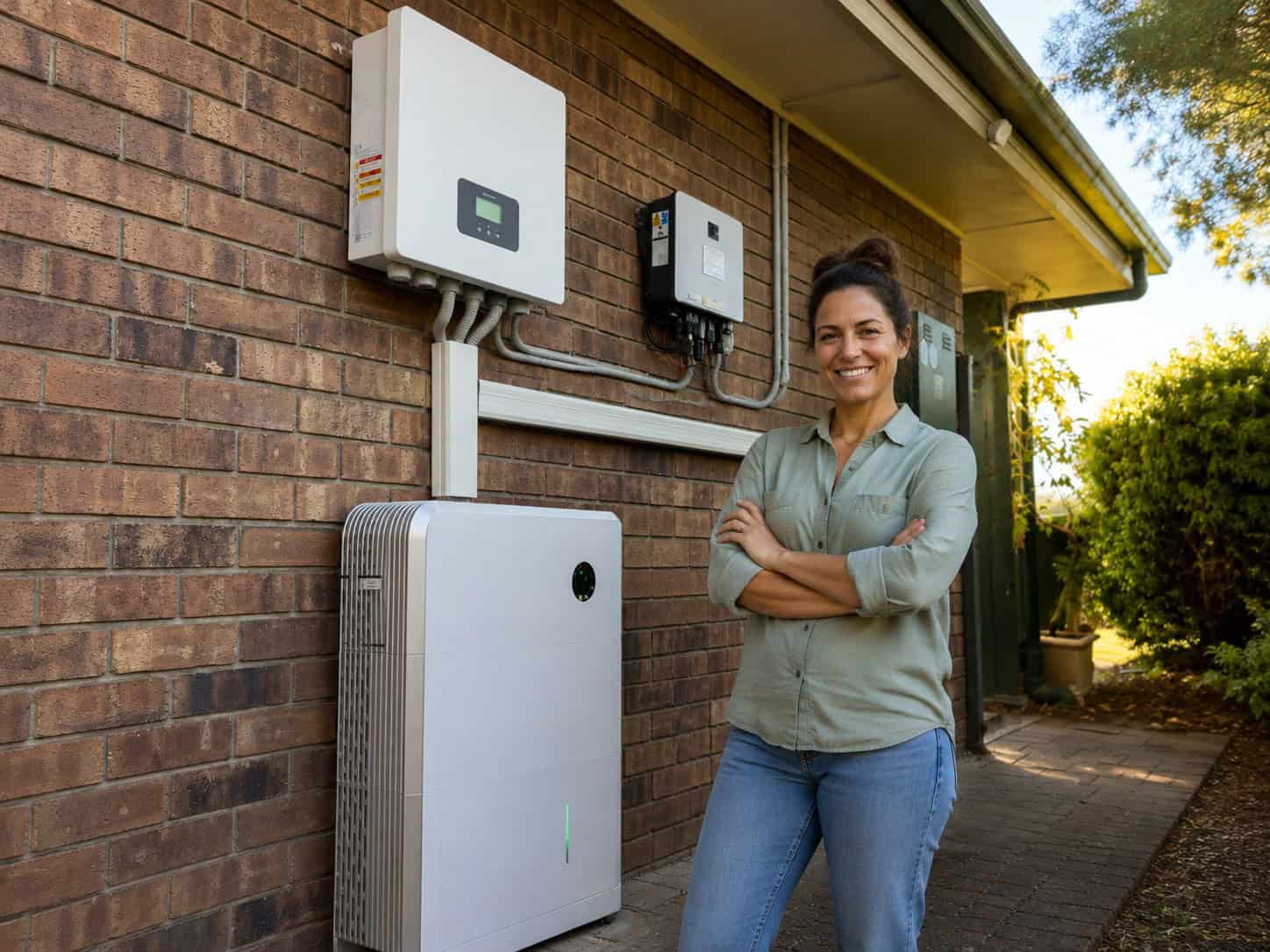
- If the only available indoor space is adjacent to a habitable room, installation is only permitted if the wall separating the battery from that room is constructed from non-combustible material, such as brick or concrete. A wall made of wood or plasterboard, for example, wouldn’t meet this requirement. In this case, a fire-resistant barrier like fibrous cement sheeting will need to be secured to the wall; and then the battery is mounted onto this.
- Installation must comply with clearance regulations and not be installed within 600mm of any exit, vertical side of a window of a habitable room or any ventilation opening into a habitable room, gas bottles, appliances like air-conditioners, heat pumps or electric hot water systems or the main entrance into the house or garage. There also needs to be 900mm clearance above the battery.
- Batteries can’t be installed in ceiling spaces, wall cavities or under floors, stairways or access walkways.
Where can a battery system be installed outside?
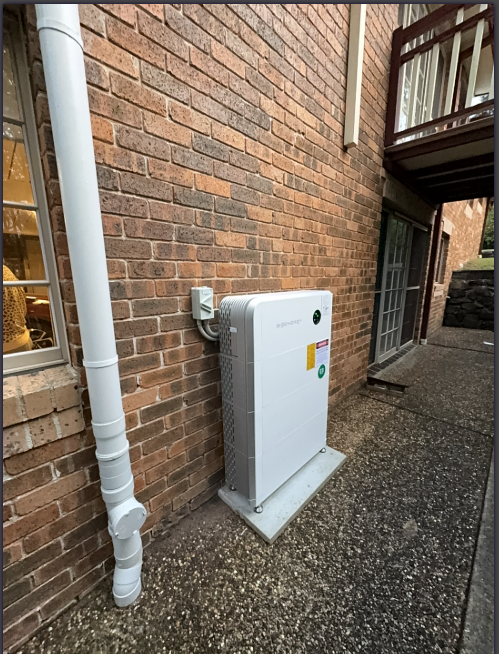
Outdoor installations are possible. Most batteries are specifically rated for outdoor use and have an appropriate IP (Ingress Protection) rating to withstand exposure to weather conditions.
Batteries should ideally not be exposed to direct sunlight for long periods, as excessive heat can affect performance and accelerate degradation. An east or south-facing external wall or a covered alcove is perfect. If north or west-facing, a battery cover is recommended.
Have your home assessed for solar battery installation
Every home is different, and the ideal battery location depends on your property’s layout, switchboard position and available wall space.
The Energy Experts’ accredited installers can assess your home and identify the safest, most practical location for your battery storage system, ensuring it meets AS/NZS 5139:2019 and Clean Energy Council requirements while maximising performance, safety and longevity.